Looking for inspiration
Genie Morman Interesting Family __exclusive__
: The name often surfaces in discussions alongside real, harrowing cases like the Whittaker family of West Virginia, who were documented in real-life films about the effects of generations of inbreeding.
The series was structured into four distinct series, with a varying number of episodes per season: Series 1 and 2 each had 26 episodes, while Series 3 and 4 had 11 and 15 episodes, respectively. A planned feature film, which would have seen the original cast in a 3D adventure, was ultimately never produced.
In an era where everyone curates a perfect life, Genie proudly displays the cracks. She shows the dishes in the sink, the teenage rebellion, the marital spat, and the tearful reunion. She has built a career on the proposition that your family doesn't have to be perfect to be interesting—it just has to be real.
The story of is a striking example of how personal trauma can be transformed into a global creative phenomenon. While her family history is rooted in a dark and scandalous past, Morman has become a symbol of resilience, using the "awkwardness" of family dynamics to build a massive digital community. The Scandalous Roots genie morman interesting family
The series found a global audience, airing in over 100 countries. It was dubbed into numerous languages, including Turkish, French, Italian, Spanish, Portuguese, Russian, and Hindi, proving the universal appeal of its family-friendly, magical comedy. In the United States, it aired on the Starz Kids & Family network starting in March 2012.
In conclusion, Genie Morman and her family are a shining example of the power of love, laughter, and legacy. Their journey is a reminder that family is at the heart of everything we do, and that by prioritizing love, respect, and mutual support, we can build a brighter future for ourselves and those around us. We hope you've enjoyed this glimpse into the fascinating world of Genie Morman and her family, and we look forward to sharing more stories of inspiration and hope in the future.
For music historians, the Morman family is a case study in "organic talent development." For sociologists, they are an example of a matriarchal/patriarchal support network beating the odds. For the rest of us? They are simply a beautiful, interesting family that happened to make great music. : The name often surfaces in discussions alongside
"Genie Morman Interesting Family" refers to a specific piece of or a hoax documentary that gained traction online around 2021. Overview of the Content
Were you looking for the psychological history of ?
The silent third member of this household was John Wiley, Genie’s older brother by four years. John was allowed to attend school and live a relatively normal external life, but inside the house, he was a ghost. He later recalled that he had never heard his sister speak or make a noise. He was forbidden from entering her room or interacting with her, and he learned to mimic his father’s silence to survive. Unlike Genie, John had the outlet of school, yet he bore the invisible scars of witnessing daily torture. After Clark’s suicide, John was largely forgotten by the media and the scientific teams, a testament to how the family’s dysfunction selectively erased some members while imprisoning others. He went on to live a quiet, private life, refusing most interviews—a decision that speaks volumes about the shame and trauma embedded in the Wiley family history. In an era where everyone curates a perfect
In a world of curated perfection, the Mormans stand out for their joyful chaos: mismatched dinner plates, tie-dye T-shirts, and a living room that doubles as an indoor jungle. It’s not about being picture-perfect. It’s about being genuinely, fascinatingly themselves.
What makes the Wiley family "interesting" is not mere sensationalism, but the way each member’s psychology fit together like a lock and key. Clark provided the ideology of total control; Irene provided the passive compliance; and John provided the silent witness. This triad of roles—tyrant, enabler, and invisible child—created a closed ecosystem in which Genie was reduced to a non-human state. Yet the family did not exist in a vacuum. Neighbors reported strange sounds; social services had received a tip when Genie was an infant; and a county nurse had noticed something amiss. The family’s isolation was as much a failure of the surrounding community as it was a product of Clark’s will. In this sense, the "interesting" nature of the Wileys is a dark mirror reflecting broader societal failures: how a family can be hidden in plain sight when no one wants to look too closely.
: She was strapped to a child's toilet during the day and bound to a crib at night. Her family members were forbidden from speaking to her.
If "Morman" was a misspelling of (The Church of Jesus Christ of Latter-day Saints), the phrase points to a different kind of cultural fascination. Mormon family histories are frequently researched because of their massive impact on global genealogy. 1. The World's Largest Family Tree
But put them together, and you get one of the most fascinating, contradictory, and wildly complex family dynamics imaginable.

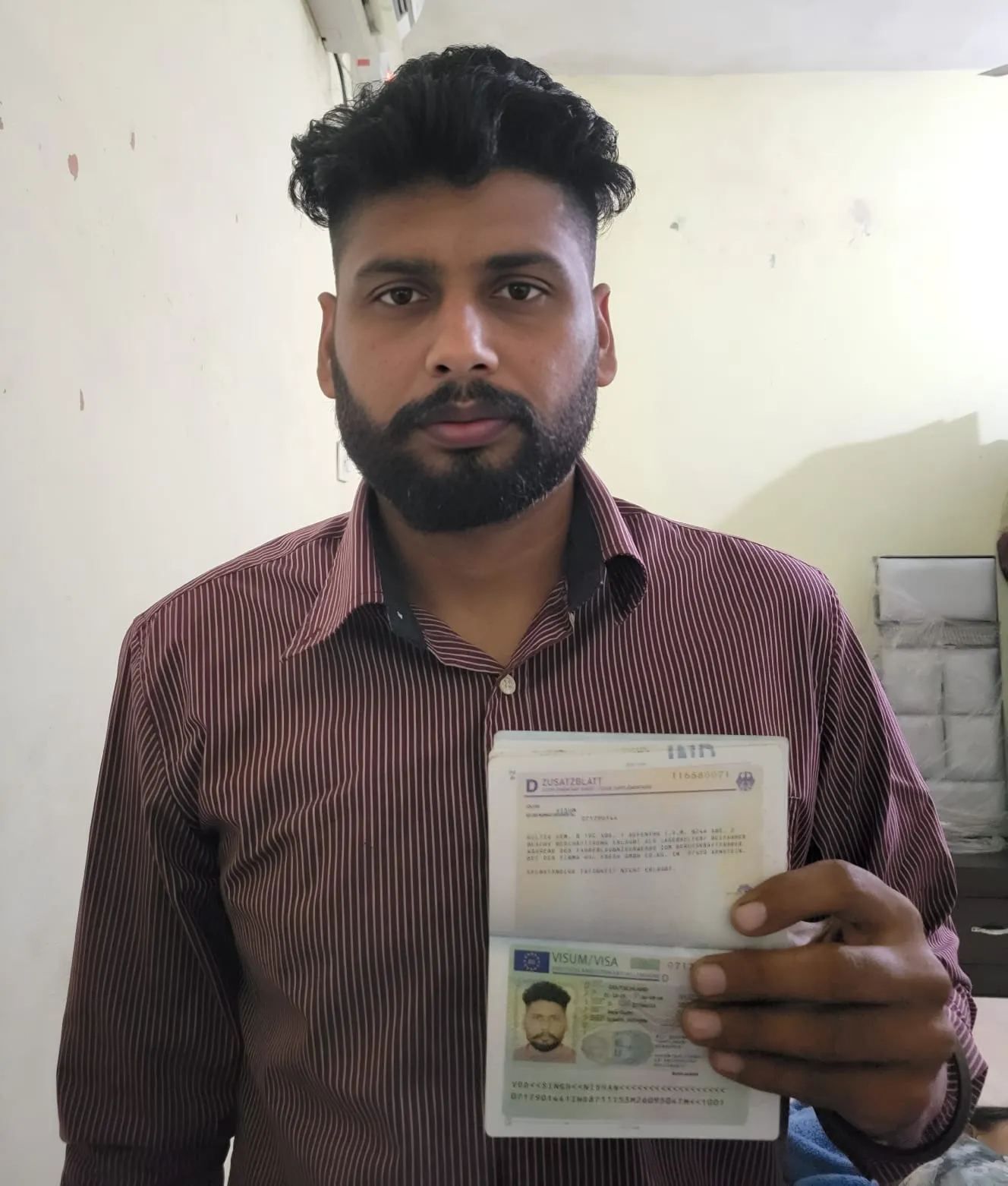


At AtoZ Serwis Plus, we help you become a global citizen with trusted support for jobs abroad, overseas education, and visa processing tailored to your goals.
Read More
1000+Visa Success

1M+ Guided

Experts

Offices

Online Services
Our Solutions
Connecting employers, job seekers, students, and agencies across Europe and beyond.

Register as an Employer Partner!
Looking to hire skilled or semi-skilled workers from Asia, Africa, the CIS, or EU countries? AtoZ Serwis Plus supports your recruitment needs for Poland, Germany, Slovakia, Hungary, Lithuania, Estonia, and beyond. We deliver comprehensive legal recruitment services, visa support, and seamless onboarding solutions tailored to your business goals. Partner with us to build a reliable, compliant, and efficient workforce.
Employer
Job Seekers Registration!
Looking to hire skilled or semi-skilled workers from Asia, Africa, the CIS, or EU countries? AtoZ Serwis Plus supports your recruitment needs for Poland, Germany, Slovakia, Hungary, Lithuania, Estonia, and beyond. We deliver comprehensive legal recruitment services, visa support, and seamless onboarding solutions tailored to your business goals. Partner with us to build a reliable, compliant, and efficient workforce.
Job Seekers
Register as a Recruitment Partner!
Are you a recruiter looking to place workers in Poland, Germany, Slovakia, or other EU destinations? AtoZ Serwis Plus provides you with trusted employer connections, legal recruitment solutions, verified job placements, and full visa assistance. Expand your recruitment business with confidence, supported by clear processes, reliable documentation, and transparent migration services.
RecruiterDo you have any questions?
Looking to work and live in Europe? At AtoZ Serwis Plus, we’re here to guide you every step of the way. Our experts provide support with job search assistance, work visa applications, qualification recognition, and European language learning. To connect with us and get started on your European journey, click one of the contact icons below.